




Water Damage Prevention: Essential Home Tips
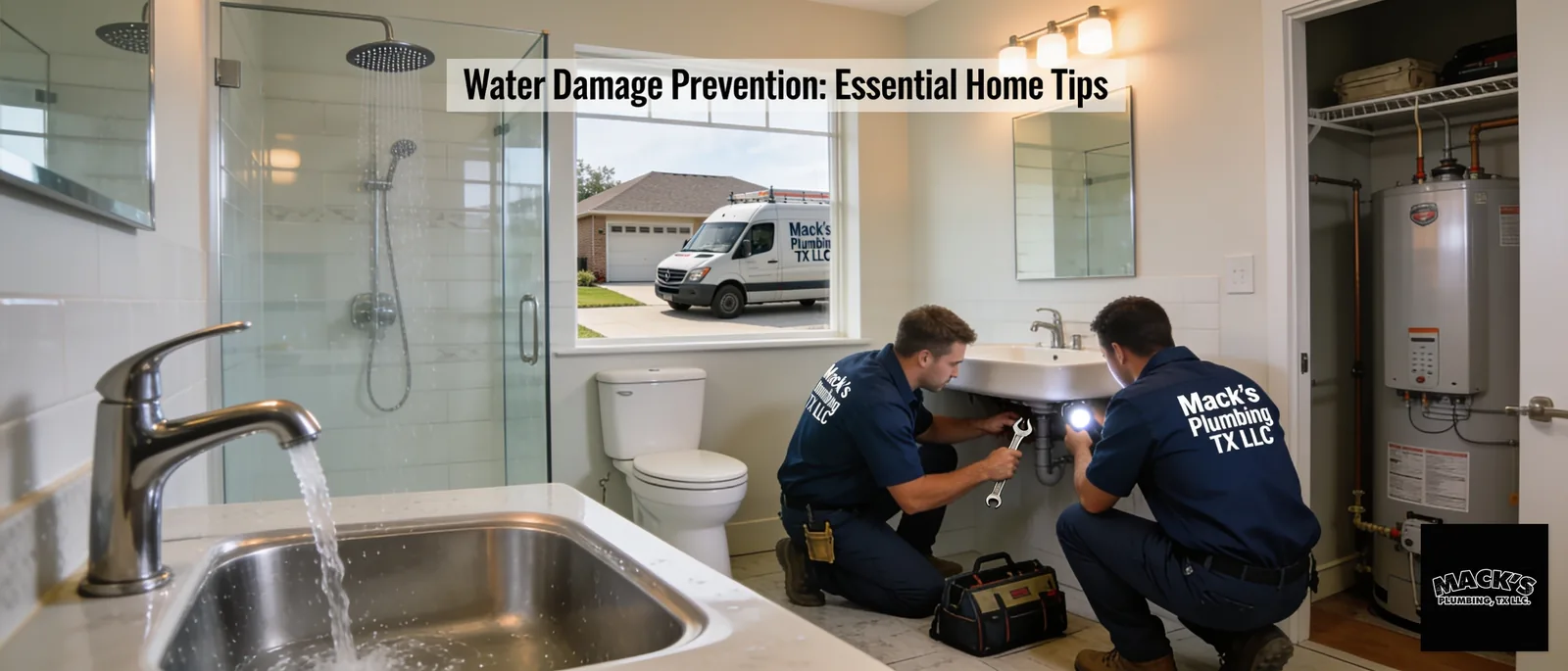
At Mack's Plumbing, TX LLC, we believe regular inspections of pipes, water heaters, and appliances form the foundation of water damage prevention. We recommend homeowners in Forney, TX schedule annual checks, address leaks immediately, install water leak detectors, and maintain proper drainage. Keeping gutters clear year-round protects your property from avoidable damage.
Regular home maintenance remains the strongest defense against water damage. Roughly 1 in 60 insured homes files a water or ice damage claim each year, which makes prevention essential rather than optional. We encourage you to inspect your roof, check pipes for leaks, and maintain your gutters throughout the year, and scheduling professional plumbing services, including water heater inspections and faucet repairs, helps us catch problems before they escalate into major repairs.
Preventing water damage at home demands consistent vigilance from every homeowner. We always recommend inspecting water heaters for leaks and unusual noises, since early warning signs often precede costly failures — our guide on water heater maintenance best practices covers the steps that extend your unit's lifespan. Monitoring supply lines, checking for hidden moisture, and addressing small drips immediately keeps minor issues from turning into major ones, and water damage remains the second most common homeowners insurance claim nationwide, trailing only wind and hail damage.
Key Takeaways
- Water damage ranks as the second most common homeowners insurance claim nationwide, trailing only wind and hail damage. We believe this makes year-round prevention just as important as storm preparedness.
- Regular plumbing inspections and prompt faucet repairs help us catch small leaks before they escalate into costly water damage. We treat these checks as a routine part of responsible home maintenance, not an occasional task.
- We provide prompt, same-day service for water heater issues and gas leak concerns whenever our neighbors need us. A fast response often makes the difference between a simple repair and an extensive restoration project.
- Proactive maintenance of your plumbing system helps prevent the majority of water damage claims before they ever happen. Staying ahead of small issues protects both your home and your peace of mind over the long run.
Why Is Water Damage So Costly at Home?
Water damage prevention starts with understanding the true financial weight of the problem. Water damage ranks among the most common and costliest disasters any home can experience, draining significant financial resources from homeowners nationwide every year.
Unlike a storm that passes through once a season, water damage is a year-round threat. Nationwide, water damage claims rank second only to wind and hail damage, and while severe winds arrive only a few times annually, water risks never stop. A slow pipe leak in January carries the same destructive potential as a summer flood.
How Often Do Homes Actually File Water Damage Claims?
Roughly 1 in 60 insured homes files a claim for water or ice damage each year. That frequency is striking, because it means water damage is not a rare, unlucky event — it is a predictable, recurring risk that every homeowner faces.
Why Does Water Damage Spread So Quickly?
Water moves fast and hides well. A small leak inside a wall can saturate insulation, rot framing, and trigger mold growth long before any visible sign appears, so by the time damage becomes obvious, repair work is far more extensive and disruptive than early intervention would have been.
Leak prevention and home flood protection are not optional upgrades — they are the practical steps that separate a manageable repair from a catastrophic loss.
As Mack's Plumbing, TX LLC, a Forney, TX-based plumbing service, we see firsthand how quickly water damage escalates when early warning signs go unaddressed. Acting early is always the smarter, less expensive path for the homes we serve.
How Can You Inspect Your Foundation for Water Risks?
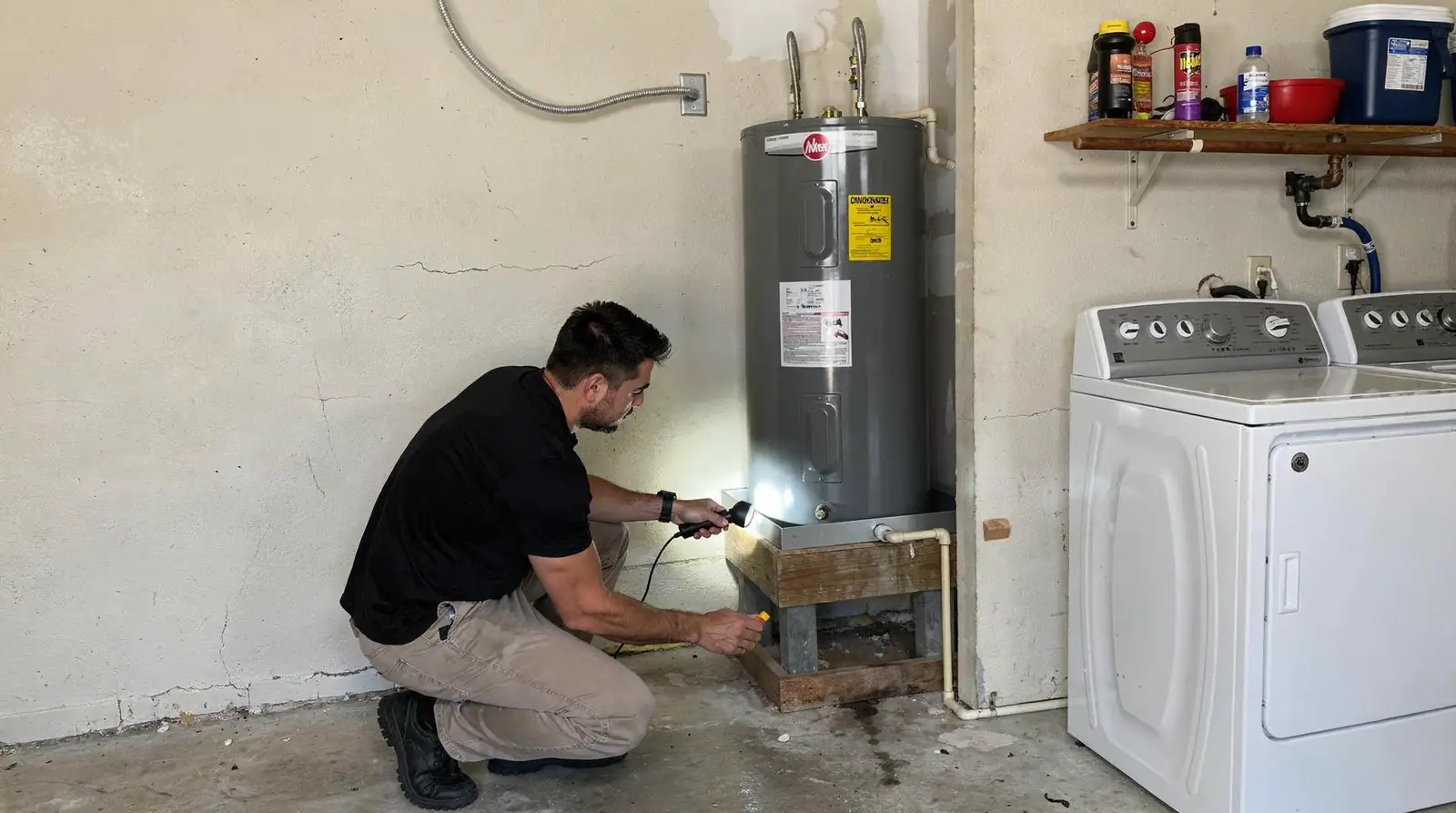
Periodic DIY foundation inspections are one of the most reliable tools for water damage prevention in any home. Catching small cracks early stops water intrusion before it escalates into structural damage or mold growth.
We recommend walking the full perimeter of your home's foundation at least twice a year, once in spring and once in fall. Look for hairline cracks, crumbling mortar, or areas where soil has pulled away from the foundation wall, since these gaps act as direct pathways for water to enter.
What Should You Look for During a Foundation Walkthrough?
Focus on three key areas during every inspection:
- Visible cracks in the foundation wall, even hairline fractures that seem harmless at first glance. Left unchecked, these cracks widen over time and let water travel directly into your home's structure.
- Soil grading that slopes toward the home channels water directly against the foundation instead of away from it. We recommend correcting the grade as soon as you notice water pooling near the base of your house.
- Efflorescence — white mineral deposits on concrete — which signals moisture has already been moving through the wall. Once you see this residue, it's a strong indicator that a closer inspection is overdue.
Any of these signs warrants prompt attention, since hidden slow leaks and internal corrosion behind walls can cause water damage and mold growth that spreads long before it becomes visible. Early detection is critical to keeping repair work manageable.
Does Standard Homeowners Insurance Cover Foundation Water Damage?
Not always. Leak prevention at the foundation level matters financially, not just structurally. Water that originates from the bottom up, such as rising groundwater or an overflowing waterway, typically falls outside a standard homeowners policy, so separate flood coverage is usually required for those scenarios.
Home flood protection starts with understanding what your policy actually covers. We strongly advise homeowners to review their insurance documents alongside any foundation findings before an issue arises.
Mack's Plumbing, TX LLC helps identify plumbing-related contributors to foundation moisture, including slow leaks and failing supply lines that can go undetected for months. Addressing these sources early protects both your foundation and your home overall.
Is Your Roof the First Line of Defense?
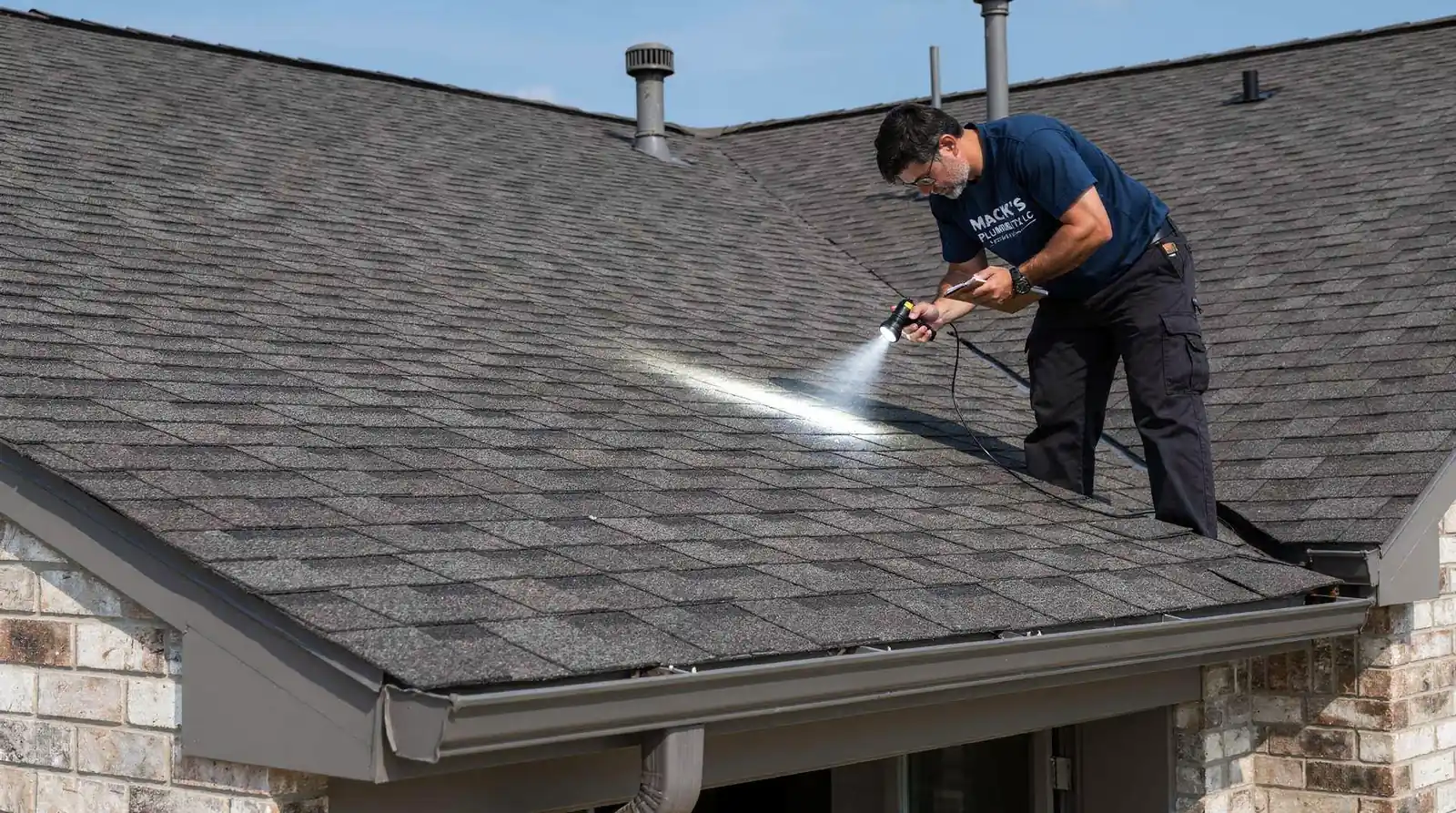
A well-maintained roof is the first line of defense for water damage prevention in any home. Roof vulnerabilities such as missing shingles, cracks, and deteriorating flashing allow water to penetrate the structure before homeowners ever notice a problem.
Regular roof inspections catch these weak points early. Without them, a small gap in the roofline becomes a pathway for moisture to travel deep into walls, ceilings, and insulation, and the damage compounds silently, often for months, before visible signs appear. As Mack's Plumbing, TX LLC, we frequently respond to water damage calls that trace back to a neglected roof and compromised interior plumbing connections.
What Should Homeowners Look for During a Roof Inspection?
Focus on these four areas during every inspection:
- Missing or cracked shingles that expose the underlayment to rainfall. Even a single damaged shingle can let water seep in during a heavy storm, so replacing them quickly prevents larger interior damage.
- Flashing gaps around chimneys, vents, and skylights where water tends to pool. These small openings are easy to overlook but are among the most common entry points for roof leaks.
- Sagging sections that signal trapped moisture or structural weakness underneath the roofline. A sagging area rarely improves on its own and usually points to a problem that has been developing for some time.
- Clogged gutters that force water back toward the roofline instead of away from the foundation. Clearing them regularly keeps water moving in the direction it's supposed to go.
Addressing even one of these issues prevents a cascade of interior damage that would otherwise be far more disruptive to repair.
Does Homeowners Insurance Cover Roof-Related Water Damage?
Standard homeowners insurance generally covers water that enters from the top down, such as rainfall, burst sprinklers, and similar sources. That coverage, however, does not eliminate the repair burden or the disruption to daily life while repairs are underway.
Ice dams illustrate this risk clearly. When heavy snowfall and freezing temperatures create an ice dam along the roofline, water backs up and can damage multiple stories of a home simultaneously. Leak prevention at the roof level, combined with solid home flood protection planning, remains far less disruptive than filing any insurance claim.
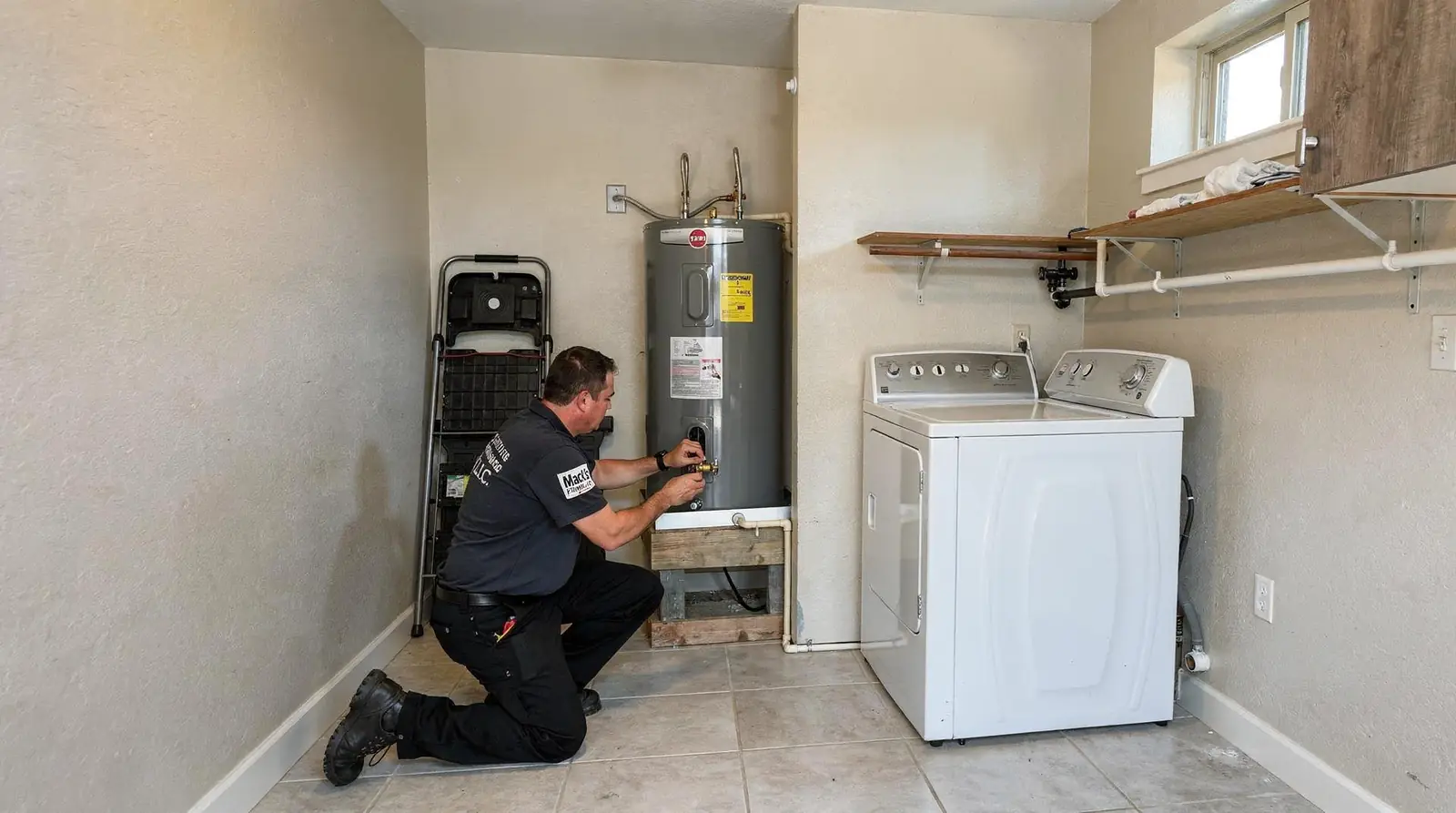
What Plumbing Checks Prevent Leaks at Home?
Leak prevention starts with routine plumbing inspections, and skipping them puts homes at serious risk. Faulty plumbing ranks among the leading causes of homeowner insurance claims, and the damage it causes is entirely preventable with the right checks in place.
Which Plumbing Areas Should Homeowners Inspect Regularly?
Every home has a handful of high-risk plumbing points that deserve consistent attention. Burst pipes, dripping faucets, and water heater issues are the most common culprits behind unexpected water intrusion. Homeowners and renters insurance often covers burst pipes, but filing a claim never fully offsets the disruption a serious leak causes, so catching problems early is always the better outcome.
We recommend focusing inspections on these key areas:
- Faucets and fixtures — even a slow drip signals a failing seal or worn valve that worsens over time. Ignoring it typically leads to a larger repair and unnecessary water waste down the line.
- Exposed pipes — look for corrosion, moisture, or soft spots in surrounding drywall. Any of these signs suggests a leak has already been active for a while and needs prompt attention.
- Water heater connections — puddles or pooling water near the base of a water heater indicate a leak that demands immediate attention. Waiting even a few days can allow the leak to spread into flooring and walls.
- Supply lines under sinks — braided lines degrade and can fail without visible warning signs. We recommend replacing them proactively rather than waiting for a failure to force the issue.
What Should Homeowners Do When a Leak Is Discovered?
Act immediately. A small leak left unaddressed escalates into structural damage, mold growth, and far costlier repairs, and water damage prevention depends on response time as much as routine maintenance.
As Mack's Plumbing, TX LLC, we offer prompt service and faucet repairs designed to stop leaks before they spiral. Home flood protection is not a single action; it is a consistent habit of inspection, prompt repair, and professional support when problems exceed a homeowner's comfort level. We treat every home with the same care and reliability we bring to every job.
How Does Your Water Heater Contribute to Water Damage?
A water heater in poor condition is one of the most overlooked sources of water damage prevention failures in any home. Water heaters develop internal corrosion and slow leaks that go undetected for months, quietly causing structural damage and mold growth long before a homeowner notices anything wrong.
Most people only think about their water heater when the hot water runs out, and by then the damage is often already done.
What Warning Signs Indicate a Water Heater Is Leaking?
Watch for these common problems that signal your water heater may be putting your home at risk:
- Leak prevention starts here — puddles or moisture pooling around the base of the unit are one of the earliest warning signs. We recommend checking this area every few months, especially as your water heater ages.
- Discolored or rusty water coming from hot-water taps often points to internal corrosion inside the tank. Once corrosion sets in, the risk of a sudden leak or failure increases significantly.
- Strange rumbling, popping, or hissing noises during operation usually mean sediment has built up inside the tank. This buildup stresses the tank walls and can eventually lead to cracks or leaks.
- Unexplained increases in utility bills can indicate internal inefficiency tied to corrosion or sediment buildup. A sudden spike is worth investigating before it turns into a larger mechanical failure.
Any one of these symptoms deserves immediate attention. Left unresolved, a slow internal leak saturates surrounding flooring, walls, and insulation, creating ideal conditions for mold growth that spreads well beyond the original source.
Do Tankless Water Heaters Also Cause Water Damage?
Tankless water heaters are not immune to water damage risks. These systems rely on precision electronics and high-temperature heating elements that require specialized knowledge to service correctly, and an unresolved fault, whether an error code, inconsistent temperature, or a compromised connection, can allow moisture to escape into surrounding spaces, undermining your home's overall home flood protection.
Mack's Plumbing, TX LLC diagnoses water heater issues before minor problems escalate into major water damage events. We service both traditional tank and tankless systems, restoring proper function and protecting your home from the hidden risks a failing water heater creates.
Can Drains and Sewer Lines Flood Your Home?
Yes — drains and sewer lines are a significant source of interior flooding. Many homeowners are caught off guard when a backup sends wastewater into living spaces, and water damage prevention starts with understanding that sewer and drain failures are just as dangerous as burst pipes or roof leaks.
Does Homeowners Insurance Cover Sewer Backups?
Standard homeowners policies frequently exclude sewer and drain backups. Many insurers offer a separate sewer backup rider that homeowners can add to existing coverage, but without that rider, repair and cleanup costs fall entirely on the homeowner. Reviewing your policy before a backup occurs is always the smarter move.
What Causes Drains and Sewer Lines to Back Up?
Several conditions turn a slow drain into a full flood:
- Tree roots that infiltrate underground pipes and restrict flow over time. Left alone, roots continue to grow and can eventually crack the pipe entirely.
- Grease buildup that accumulates along pipe walls over months of everyday use. As the buildup thickens, it narrows the pipe until wastewater can no longer pass through freely.
- Debris and other organic material that compounds into severe blockages when combined with grease or roots. Once these materials merge, clearing the line typically requires professional equipment.
When these obstructions go unaddressed, wastewater has nowhere to go except back into the home. That is where professional drain clearing becomes essential for leak prevention and overall home flood protection.
Mack's Plumbing, TX LLC uses specialized machinery equipped with rotating blades to break apart exactly these kinds of obstructions. This rotating-blade method works on both minor slow drains and severe, fully blocked lines, making it a versatile solution across a wide range of plumbing conditions.
Proactive drain maintenance is far less disruptive than emergency flood remediation. Scheduling a sewer line inspection before problems escalate keeps wastewater moving in the right direction, out of the home and not into it.
What Preventive Measures Protect Against Home Flooding?
Water damage prevention starts with a layered approach, since no single fix eliminates every risk. Homeowners who combine structural maintenance, smart plumbing upgrades, and proper insurance coverage give their homes the strongest possible defense against water-related disasters.
Protecting a home from flooding requires action on multiple fronts. Here are the core measures every homeowner should prioritize:
- Roof integrity checks: Inspect flashing, sealant, and shingles regularly, since damaged or missing roof components allow water to penetrate the structure. Left unnoticed, this kind of damage often spreads far beyond the entry point before anyone realizes there's a problem.
- Plumbing upgrades: Aging pipes and outdated fixtures are a leading source of interior leaks. We recommend replacing them during a remodel, which meaningfully reduces long-term exposure to water intrusion, including a switch to modern tankless systems where it makes sense for your home.
- Insurance review: Practical prevention and the right coverage work together, and neither alone fully safeguards a home. We encourage homeowners to revisit their policy each year alongside their maintenance routine.
How Does Roof Maintenance Support Leak Prevention?
Leak prevention at the roof level is one of the most effective, and most overlooked, strategies a homeowner can apply. Keeping all roof components, including flashing and sealant, intact and fully functional stops water from finding a path into the structure, and a compromised roof can allow moisture to travel through walls and ceilings, creating damage that is far more expensive to repair than a routine inspection would have been.
When Should Homeowners Consider a Plumbing Remodel for Home Flood Protection?
Home flood protection often requires looking beyond the roof and gutters, since the plumbing system inside the walls carries equal risk. Mack's Plumbing, TX LLC offers full remodel plumbing services that include upgrading pipes and fixtures, and modernizing an older plumbing system reduces the likelihood of slow leaks, burst pipes, and the long-term water damage those failures cause. If a home has aging infrastructure, a remodel is a proactive investment, not just a cosmetic one.
Combining roof maintenance, plumbing upgrades, and adequate insurance coverage creates a comprehensive shield against water damage. We recommend addressing all three areas, not just the most visible one.
When Should You Call a Professional Plumber?
Water damage prevention starts with knowing when a plumbing problem exceeds a DIY fix. Waiting too long to call a professional plumber turns a minor issue into a costly repair that disrupts your entire home.
We recommend calling a professional plumber the moment any of these warning signs appear:
- Inconsistent water temperature or a complete loss of hot water often points to a failing heating element or a deeper mechanical issue. Waiting it out rarely fixes the underlying problem and usually makes the eventual repair larger.
- Visible leaks, water stains, or unexplained moisture near fixtures or appliances are signs that water is already finding its way where it shouldn't. The sooner we can inspect the source, the less damage it causes to your home.
- Error codes on a tankless water heater display indicate the system has detected a fault that needs professional attention. Continuing to run the unit without addressing the code can allow a small issue to become a major one.
- Unusual noises coming from your water heater or pipes, such as banging, rumbling, or hissing, usually signal sediment buildup or pressure problems. These sounds tend to get worse, not better, the longer they're ignored.
- Slow drains that persist after basic clearing attempts often mean the blockage sits deeper in the line than a plunger or drain cleaner can reach. At that point, professional equipment is usually needed to clear it fully.
Acting on these signals quickly is the difference between a straightforward repair and a full-scale water damage restoration.
What happens if you delay calling a plumber?
Delaying professional service allows small plumbing failures to escalate. A water heater showing early signs of trouble, such as strange noises, minor leaks, or inconsistent output, can progress to internal corrosion or flooding if left unaddressed. Beyond the physical damage, a disrupted hot water supply affects every part of a household's daily routine, from showers to laundry to meal preparation.
How fast can a professional plumber respond to an urgent issue?
Speed matters when leak prevention is the goal. As a family-owned, Forney, TX-based company, we offer prompt service for urgent plumbing issues that put your home at risk, and we diagnose the problem quickly to restore function before minor damage becomes a major one.
Home flood protection is also a priority for the communities we serve. We offer special appreciation discounts for military personnel and first responders, because protecting homes is a responsibility we take seriously for those who protect others.
Protect Your Home — Reach Out to Mack's Plumbing, TX LLC Today
Water damage prevention requires vigilance and proactive maintenance, but the investment in your home's protection pays dividends. By addressing leaks promptly, maintaining your plumbing system, and staying alert to warning signs, you significantly reduce the risk of costly damage.
When issues arise, Mack's Plumbing, TX LLC is ready to provide reliable, prompt solutions for homeowners throughout Forney, TX. Reach out to our team today to schedule an inspection or get help with an urgent plumbing concern before it becomes a bigger problem.
FAQ
How common is water damage among insured homes?
Roughly 1 in 60 insured homes files a water or ice damage claim each year, making it the second most common homeowners insurance claim nationwide, trailing only wind and hail damage.
Does Mack's Plumbing, TX LLC offer same-day service for water heater issues?
Yes. As a family-owned company based in Forney, TX, we provide same-day service for water heater issues and plumbing emergencies whenever our neighbors need us.
What plumbing services help prevent water damage at home?
We recommend regular water heater inspections and prompt faucet repairs, since catching small issues early stops leaks before they escalate into costly water damage.

Customer Testimonials

Robert with Macks Plumbing has saved my repair/reno project so much time and money by finding the problems that other plumbers couldn’t. He is easy to work with, direct and honest. Couldn’t recommend him with more confidence.
Quick response, knowledgeable and courteous. Techs that came for water heater made sure everything cleaned up and working properly. Will use Mack's again when I need work in future.
Excellent service. Prompt & professional. Great communication on arrival time and repairs needed. Easy to work with. We will use them again.
Showed before the expected time and both guys were polite, knowledgeable and more than ready to get the job done. I will definitely be using them again and recommending them to everyone I can!

Financing
We make it easy to get the plumbing services you need with flexible financing options through Wisetack, including zero down plans with approved credit.