

Sump Pump Repair in Scurry, TX
Sump Pump Repair in Scurry, TX delivers fast, expert service to prevent flooding. Learn more and schedule your repair today.

Sump Pump Repair in Scurry, TX
Sump pump failure in Scurry, TX can quickly lead to standing water in crawlspaces, saturated soil around slab foundations, and damaged flooring and insulation. Because North Texas weather delivers heavy spring and summer storms plus occasional flash flooding, a malfunctioning sump pump is a pressing household risk.
Why timely sump pump repair matters in Scurry, TX
Scurry and the surrounding Kaufman County area experience concentrated rainfall and occasional severe storms that can create rapid water accumulation. Many local homes sit on slab or crawlspace foundations where proper drainage depends on a working sump system and clear discharge paths. Left unaddressed, sump pump issues can lead to mold growth, wood rot, loss of insulation R-value, and structural concerns. Fast diagnosis and repair reduce restoration costs and protect indoor air quality.
Common sump pump problems in Scurry homes
- Pump won’t start: Often caused by power issues, tripped breakers, failed float switches, or burnt motors.
- Runs constantly or short cycles: Frequently due to a stuck or misadjusted float, incorrect pit sizing, or a failed check valve causing pump to re-pump discharged water.
- Intermittent performance: Debris, silt, or a clogged intake screen can sporadically block operation.
- Weak or no discharge: Broken or collapsed discharge lines, frozen or clogged outlets, or failed impellers reduce flow.
- Motor hums but won’t pump: Seized impeller, worn bearings, or electrical faults inside the motor.
- Alarm or backup failure: Battery backup systems, alarm floats, or control panels not functioning during power outages.
- Corrosion and wear: Submersible pumps exposed to sediment and minerals can corrode seals and reduce lifespan.
How technicians diagnose sump pump problems
Technicians follow a systematic process to quickly identify root causes without unnecessary parts replacement:
- Safety and power check: Verify power at the outlet, inspect wiring, check GFCI and breaker status, and ensure power cords and connectors are dry and secure.
- Visual pit inspection: Remove pit cover to check water level, debris, sediment buildup, and float position. Look for visible cracks or pit liners that are dislocated.
- Functional test: Pour water into the pit to simulate high water and observe float movement, pump activation, and discharge flow. Confirm check valve operation to prevent backflow.
- Electrical testing: Use a multimeter or clamp meter to check voltage and motor amperage. Abnormal draw indicates motor stress or mechanical binding.
- Discharge and plumbing inspection: Trace discharge line for crimping, separation, frozen sections, or incorrect slope. Evaluate external outlet and the point where water exits the property.
- Backup system evaluation: Test battery backup, control panel, alarms, and switch operation to ensure the secondary system will perform in outages.
Typical repair procedures and parts used
Repairs are tailored to the diagnosed issue. Common procedures and components include:
- Float switch replacement or adjustment: Replacing worn or jammed floats or switching to a more reliable piggyback float design.
- Check valve replacement: Installing new PVC or spring-loaded check valves to stop water from flowing back into the pit.
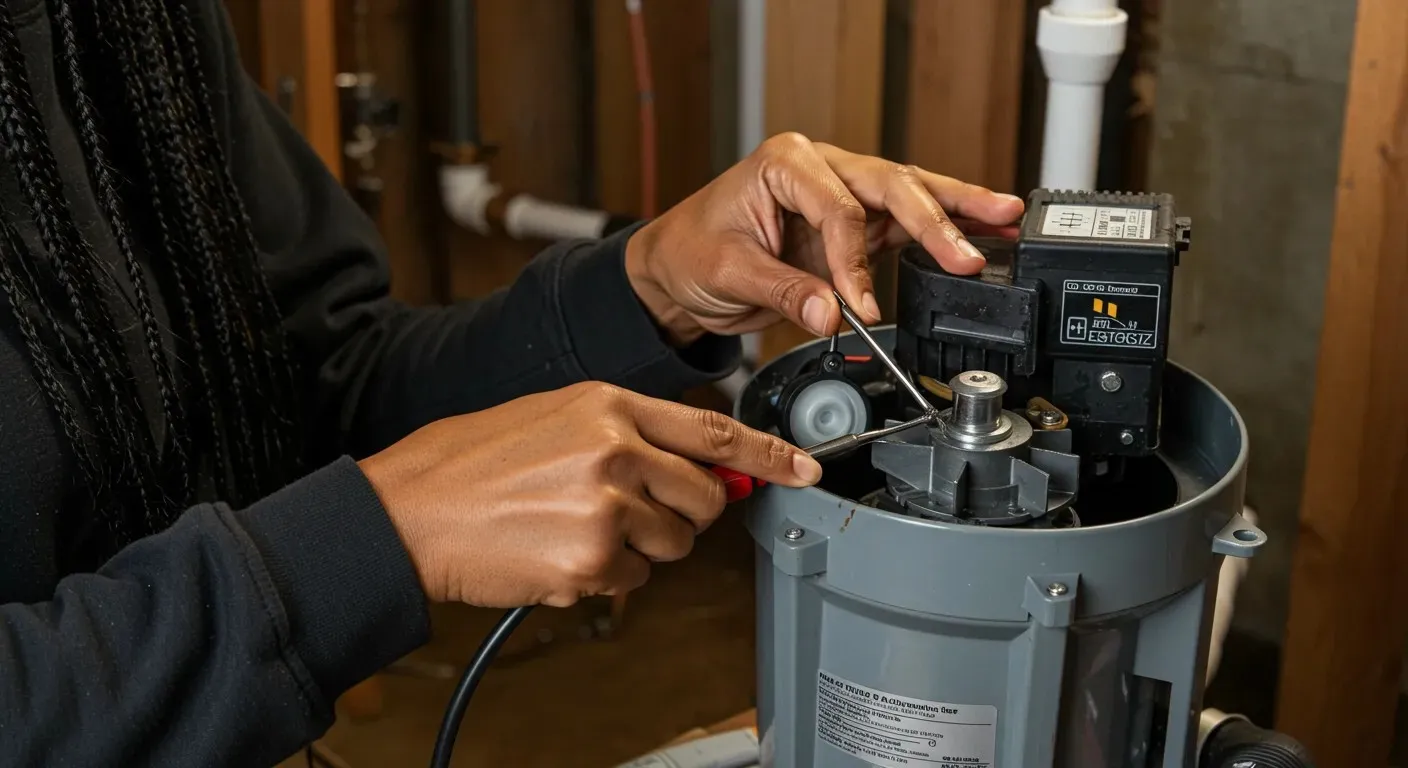
- Impeller and seal service: Cleaning or replacing impellers, seals, and bearings on serviceable pumps.
- Motor replacement or full pump swap: For burned motors or significant wear, technicians replace the pump with a properly sized submersible or pedestal model. Modern submersible pumps are common in Scurry because they handle sediment and run quieter.
- Discharge line repair or rerouting: Repairing collapsed PVC, adding proper slope, or extending discharge to a safe drainage point. Installing freeze-resistant routing or an above-ground loop may be done where necessary.
- Battery backup and alarm installation or repair: Replacing aged batteries, upgrading to longer-lasting systems, and repairing alarm sensors and control panels.
- Pit cleaning and liner installation: Removing silt and debris, and installing or reseating pit liners to prevent solids from clogging the pump intake.
- Electrical repairs: Replacing cords, outlet upgrades, or installing dedicated circuits and GFCI protection where missing.
Typical parts used in repairs include submersible and pedestal pumps, float switches (snap or tether/piggyback), check valves, PVC discharge piping, unions and adapters, pit liners, alarm modules, batteries and chargers for backup systems, and replacement impellers or motor assemblies.
Emergency troubleshooting and response expectations
If water is rising in the pit or crawlspace, follow basic safety-first troubleshooting:
- Confirm power: Check the breaker and any GFCI outlet. Do not attempt electrical repairs if the area is wet.
- Observe the float: If the float is stuck against the pit wall or tangled with debris, it may be freed without reaching into water. Use a dry stick or pole to reposition if safe.
- Look for external blockages: Check the discharge outlet for visible clogs or collapsed tubing.
- Use a temporary pump only if safe and appropriate: Portable transfer pumps can remove water but require proper handling and electrical safety.
- Do not enter a flooded crawlspace: Hazardous atmospheres and electrical risks make entry dangerous.
In Scurry, Texas, emergency plumbing response from local technicians commonly ranges from one to four hours depending on travel distance, time of day, storm impacts, and technician availability. For non-urgent repairs, same-day or next-day service is typical in the local area. Response time can increase during widespread storms when multiple properties need emergency service.
Warranty and guarantee expectations
- Manufacturer warranties: New pumps and major components typically carry manufacturer warranties ranging from one to five years on motors and limited warranties on parts. Warranty terms vary by brand and model.
- Labor warranties: Independent plumbing technicians and contractors often provide a limited labor warranty covering repairs for a set period (commonly 30 to 365 days). Always request written warranty terms on parts and labor.
- Extended protection: Battery backups and electronic controls often have separate warranty coverage. Keep purchase and installation records, model and serial numbers, and receipts for warranty claims.
Preventive maintenance and long-term tips for Scurry homeowners
- Schedule annual checks: Inspect the pit, float, check valve, and discharge line yearly and after major storms.
- Consider battery backup: Given Texas storm-related power outages, a battery backup or secondary pump significantly reduces flood risk.
- Keep discharge clear: Direct discharge away from the foundation to a municipal storm drain or approved dry well. Avoid routing toward neighboring properties.
- Install alarms: High-water alarms provide early warning before water reaches vulnerable areas.
- Replace aging pumps proactively: Sump pumps typically last 5 to 10 years depending on use and water quality. Replacing an older pump prevents failures during storm seasons.
- Protect wiring and outlets: Ensure electrical components are rated for wet locations and have proper GFCI protection.

Customer Testimonials

Robert with Macks Plumbing has saved my repair/reno project so much time and money by finding the problems that other plumbers couldn’t. He is easy to work with, direct and honest. Couldn’t recommend him with more confidence.
Quick response, knowledgeable and courteous. Techs that came for water heater made sure everything cleaned up and working properly. Will use Mack's again when I need work in future.
Excellent service. Prompt & professional. Great communication on arrival time and repairs needed. Easy to work with. We will use them again.
Showed before the expected time and both guys were polite, knowledgeable and more than ready to get the job done. I will definitely be using them again and recommending them to everyone I can!

Financing
We make it easy to get the plumbing services you need with flexible financing options through Wisetack, including zero down plans with approved credit.